Read Time: 15 Minutes
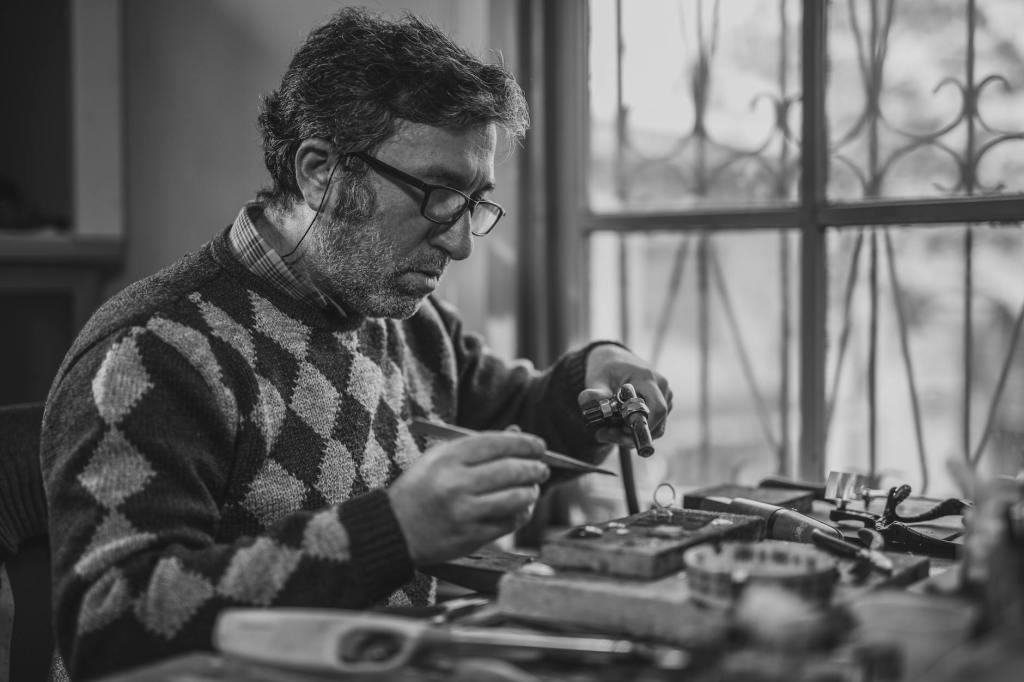
There’s the “hum,” as Shonda Rimes calls it. It’s that God-given state of flow and hum-drumming that seems to bring you peace, all while you are viciously working at something with such veracity that everything else drifts into the background.
It’s that deep connection with a project, task, or activity. Insomuch that it draws you away from everything else, capturing you in a world of bliss and wonderment. Picture yourself lost in a jungle, but cherishing every second. In a broken world, full of trials and tribulations, you have found the one thing you love to do. It’s your contribution to the world, a Hebraic concept known as tikkun olam (“repairing the world”).
Okay, maybe that is ‘too deep, too quickly,’ but there must be something you have done recently or frequently, where you feel this type of magnetic pull. And if you have, and know exactly what I’m talking about – that’s great! I’m happy for you and please share your gift with the world. Perhaps you will also take away a few tidbits of wisdom by still following on here, or you can jump ahead to Part 2.
But, and here’s the but, I’m not talking about addiction or obsession with something mundane or artificial such as video games (sorry grown up kids). It can (and should) be something you find fun, but it’s also something someone else_needs. I’m talking about something _real_and _productive where you felt a draw, a subtle push, and maybe even heard a whisper. And sure if you are good enough at video games that someone else will pay to watch you, fine, you win. But the question we need to ask ourselves is, what value does it bring or add to the world? And please understand – I’m not discounting art or entertainment at all. This writing here is a form of art. And this is precisely the point. The calling can be anything really. So long as there is someone that it helps, so long that it “repairs” even one tiny aspect of the world. It may put a smile on someone’s face. That is the aim or aspiration. Shonda Rimes mentioned in the opening sentence above is a Producer. The opportunities are endless, you just have to listen and open yourself up to the voice of God.
“If you have ears, then hear!”
Mattityahu (Mat) 11:15 CJB
But (there it is again – the “but”), His voice won’t come every day in alarm-like clockwork each morning to pull you out of the bed and give you the caffeine-like drive to start your task. It comes often in the form of the of nudge, some days in the form of a push or prod. When everyone and everything else in the world is screaming, God speaks in a whisper. And in those best cases, in the form of a rush of energy, inspiration, like fireworks inside, where you just know this is what you are meant to do in the moment. It sounds like an internal voice from the wilderness of our soul, which calls us to do something we know deep down we ought to be doing (emphasis on ought). Hence, we hear this called (no pun intended) our “calling.” We even have to pay the “stupid tax” occasionally – as my father-in-law calls it – when we don’t listen to this voice. It’s far deeper than intuition, we know with 100% certainty it’s right.
And this is not to say that all “voices” or “urges” are from God. They must be tested against His word to see if they are good – according to His purpose. Remember His purpose is always our “North Star” or compass to guide us and keep us on the straightened path. Herein, the magnetic pull metaphor applies even stronger.
That being said, not all of these “pushes” are related to our calling unfortunately. We must cull through decision after decision, daily chore after daily duty, and determine which of these topics or tasks brings us the most joy. If you still don’t have a clue about what I am talking about, you are either a robot, or you need to expand your horizon my friend.
Just kidding. You can still use any of these activities or methods detailed below in order to filter and refine your passion or to seek out your gift. And I really encourage you to spend time exploring, creating, reflecting, praying, reading and meditating on His Word. For this is the joy of life that He has breathed into us! Let your journey and search for your calling be one of peace, pleasure, and experience. Let go of the pressure. Life is short, but as we live for our eternal salvation, find your calm in His glory and grace.
The late Chief Rabbi Jonathan Sacks puts it simply like this:
It’s “where what you want to do meets what needs to be done. That is where God wants us to be.”
Rabbi Sacks continues:
“If you don’t have a passion, take time out to discover it…keep your dreams, Joseph dreamt dreams, a Jewish or Christian or Catholic or…leader is one who dreams dreams.”
Take the time to think about what needs to be done. Many of us don’t even take the time to think at all, let alone about what needs to be done outside our immediate familial circle. Even worse, there are days that we don’t even think about another human being. But that’s okay, that’s what makes us human. We are inherently flawed, but it is the scientific pursuit, the endless questioning, and awareness of self which separates us from animals. God created us to be mini-creators, to desire prosperity and growth itself.
“God blessed them: God said to them, “Be fruitful, multiply, fill the earth and subdue it. Rule over the fish in the sea, the birds in the air and every living creature that crawls on the earth.””
B’resheet (Gen) 1:28 CJB
Now what topic did God make you naturally desire? It’s okay to dream and let your imagination take over here. God gave us imaginations and creative minds for a reason. We are made in His image.
“Then God said, “Let us make man in our image, after our likeness. And let them have dominion over the fish of the sea and over the birds of the heavens and over the livestock and over all the earth and over every creeping thing that creeps on the earth.” So God created man in his own image, in the image of God he created him; male and female he created them.” (Genesis 1:26-27, ESV)
Notice that these passages are repeated almost word for word right after one another. Normally this means we should pay attention!
So take a second to pause and reflect before you dive deeper here. It’s okay. I know you want to finish this article to check it off the list. The list is the ends, this is the journey. Now enjoy it.
“Then Moses said to the people of Israel, “See, the LORD has called by name Bezalel the son of Uri, son of Hur, of the tribe of Judah; and he has filled him with the Spirit of God, with skill, with intelligence, with knowledge, and with all craftsmanship, to devise artistic designs, to work in gold and silver and bronze, in cutting stones for setting, and in carving wood, for work in every skilled craft. And he has inspired him to teach, both him and Oholiab the son of Ahisamach of the tribe of Dan. He has filled them with skill to do every sort of work done by an engraver or by a designer or by an embroiderer in blue and purple and scarlet yarns and fine twined linen, or by a weaver—by any sort of workman or skilled designer.” (Exodus 35:30-35, ESV)
Stage A: Experimentation & Discovery (including a Disclaimer)
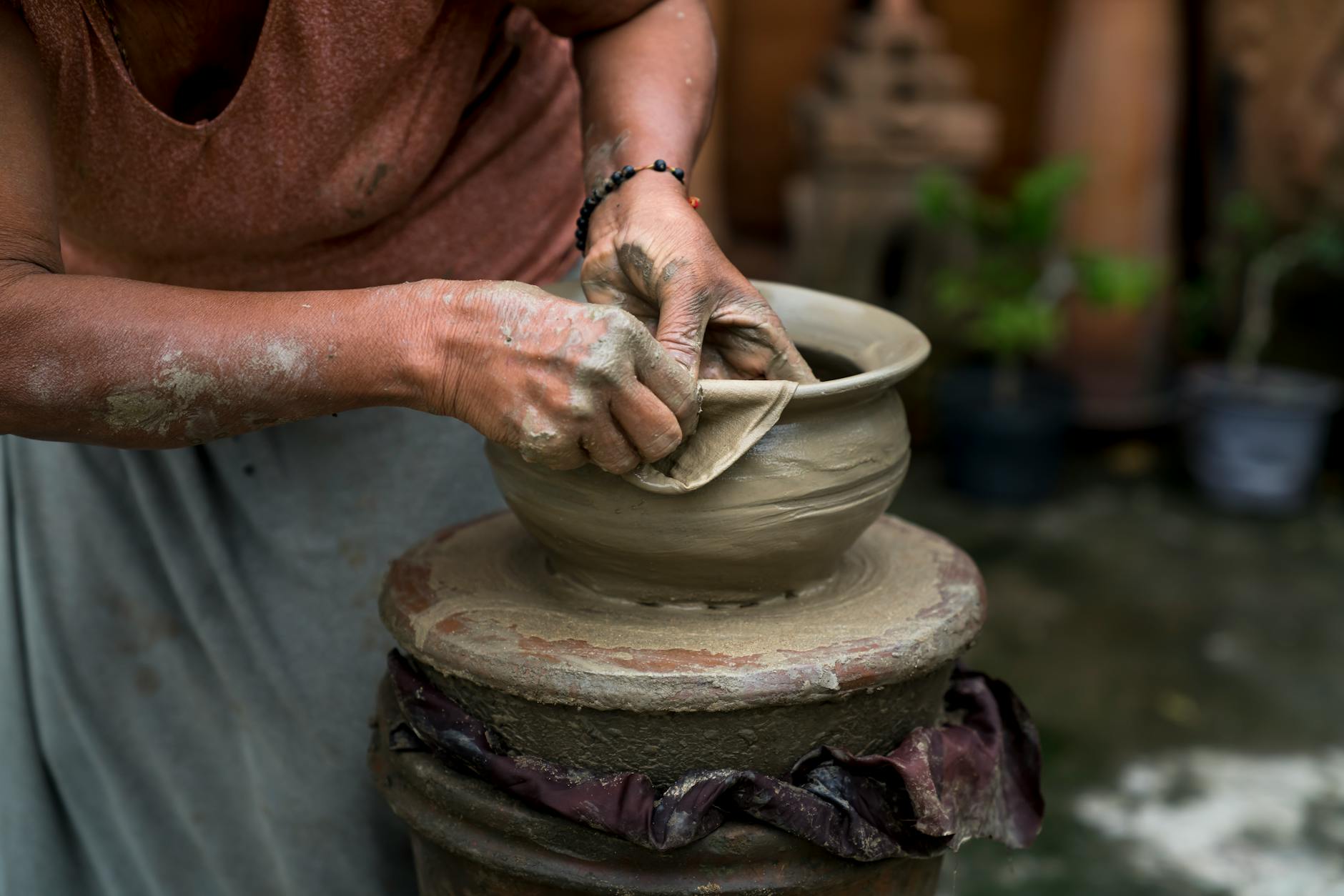
The Hebrew word for explore is also the same word that is used for “digging” or “seeking out”
חָפַר
châphar
Typically when someone is digging, there is a reason behind it. When we are seeking out, we are looking for something. Exploration is not an aimless wanderlust but rather an exercise grounded in intentionality.
“The kingdom of heaven is like treasure hidden in a field, which a man found and covered up. Then in his joy he goes and sells all that he has and buys that field. “Again, the kingdom of heaven is like a merchant in search of fine pearls, who, on finding one pearl of great value, went and sold all that he had and bought it. “Again, the kingdom of heaven is like a net that was thrown into the sea and gathered fish of every kind.” (Matthew 13:44-47, ESV)
The Kingdom is something that is marvelous and must be sought. And aren’t we told to seek FIRST the Kingdom earlier in the book of Matthew 6:33. Thus, it begs the question. Maybe one of the many aspects of this life is to explore how we are to fit within His Kingdom. As such, I keep coming back to this Rabbi Sacks quote.
It’s “where what you want to do meets what needs to be done. That is where God wants us to be.”
Even the late Rabbi himself explored being an economist among several other careers before settling on becoming a Rabbi.
The fact is there is no recipe to success. There is no recipe to finding your calling or passion in life. There are only ingredients and methods which, when used in the pursuit, will add flavor and character to the journey of your life. Every self-help book or book that claims to give you all the secrets with a concrete roadmap is simply the reflection and study of one individual. For anything, it is important to discover what works for you. We are all made in His image, but each in our own unique way, as part of our connected body through Messiah Yeshua.
Some of the key ingredients to be used in exploration are curiosity, willpower, and a little bit of self-discipline. Some of the tools you will need are family, mentors, friends, and ideas for experimentation. You will need some additional key methods later in the resilience part, but here you also need a bit to get you going.
If you don’t already have ideas, then start dreaming. And perhaps dive into some of the first things that come to mind. Remember the whisper. And remember the words of Rabbi Sacks.
“If you don’t have a passion, take time out to discover it…keep your dreams, Joseph dreamt dreams, a Jewish leader is one who dreams dreams.”
But if you are like me, you probably have too many ideas. Or you love to spend time dreaming. Just be careful, eventually you wake up to act on these dreams. Therefore, it is critical to start to build your own “dream map” or how all your dreams link together and to objectives based on action. Fortunately, there are some great exercises to help you get started.
Warren Buffet used a well-known goal-setting exercise which helped him prioritize and focus his dreams. I will paraphrase (and there are multiple variations out there now), but simply put, first brainstorm and write down 25 goals you have for yourself in life. This also works for annual or 5-year goals as well. Again, this may seem daunting but if you really take the time to dream and imagine your life, they should start to come. It really helps to start also discussing this with your spouse. For some people, it works better to talk things out, rather than trying to do it alone.
After you have your list, immediately eliminate the top 10 you see that don’t really excite you or feel like they might come from others and not you. It’s also okay if you prefer to divide this into 5 for you and 5 for your spouse to eliminate. But at the end of the day, you also need to have your own list. It can be aligned with your spouse, but each person can take their own piece out of the puzzle. This may be easy or difficult, it doesn’t matter, as long as you cross 10 goals out.
Now, I know you probably were expecting this, but now you have to choose your top 5 out of the remaining 15. This might take even more time than the first step. But these top 5 that you select are your priorities. These need to be your focus, the rest are distractions. In many cases, the secondary priorities, things we indeed desire to achieve at some point in our life, serve more as distractions than the periphery of meaningless other distractions (e.g. social media, TV, etc.). The fact is that sometimes we just try to do too much.
I might also want to add one more loop to the mix though. Take a second to reflect on your top 5. Are they things that will help others too – either directly or indirectly. If the answer is yes, then you are definitely on the right track. If they seem 100% “me-focused” or “materialistic,” like “buy my first sports car” or “move to Hawaii,” you might need to go back to the drawing board. However, if your plan is to move to Hawaii, start a non-profit, and give free rides to the elderly in your sports car, well then that is a different (and super interesting) story.
Nevertheless, at the end of this exercise (and there are others that work as well), you are left with the most important objectives for your life or at least in the short-term.
Now ask yourself several questions. Do you see a common thread? Is there a theme in your objectives? Or is there one role or job or responsibility that is related to each of these items?
Perhaps that is your calling. For when He calls us, He calls us according to the natural gifts and passions that He ingrained in us. And even if your passion is not refined into a “gift” or talent as we call it – please understand that practice and action will get you there. The cliche ‘Practice makes perfect” has some truth to it, but perhaps it would be better written as “Practice makes purpose.” While we may never be perfect, practice not only makes us more of an expert every day, it also gives us more appreciation for the nuances of our task and work. And God will give you the perseverance you need to continue to practice, but that is for Part 2.
“The purpose in a man’s heart is like deep water, but a man of understanding will draw it out.” (Proverbs 20:5, ESV)


“When I first started interviewing ‘grit paragons,’ I assumed they’d all have stories about the singular moment when suddenly they discovered their God-given passion. In my mind’s eye, this was a film-able event, with dramatic lighting and a soundtrack of rousing orchestral music, commensurate with it’s monumental, life-changing import” -Angela Duckworth, Grit: The Power of Passion & Perseverance
“In fact, researchers have settled on what they believe is the magic number for true expertise: ten thousand hours.” – Malcolm Gladwell
But (last “but”, I promise), please take this as a disclaimer, warning, or slap in the face – whatever you need. We must not put our calling in and of itself on a pedestal. It must not become an idol for us that we worship and lose sight of the bigger picture. We may begin to think our calling is about us, when it is really a reflection of God, His glory, and His will and testament. We have to be careful that we do not become like Pharaoh, with a hardened heart, and be used for an alternative purpose.
“For by now I could have put out my hand and struck you and your people with pestilence, and you would have been cut off from the earth. But for this purpose I have raised you up, to show you my power, so that my name may be proclaimed in all the earth. You are still exalting yourself against my people and will not let them go.” (Exodus 9:15-17, ESV)
“The LORD has made everything for its purpose, even the wicked for the day of trouble.” (Proverbs 16:4, ESV)
Again, we must always remember that everything is for God and His glory, not ours. When we keep this at the forefront of our mind, like frontlets between our eyes, It’s as easy as A, B, C. Now queue the music (and get started).

Stage B: Test Everything w/ Scripture
“For if anyone thinks he is something, when he is nothing, he deceives himself. But let each one test his own work, and then his reason to boast will be in himself alone and not in his neighbor.” (Galatians 6:3-4, ESV)
“Rejoice always, pray without ceasing, give thanks in all circumstances; for this is the will of God in Christ Jesus for you. Do not quench the Spirit. Do not despise prophecies, but test everything; hold fast what is good. Abstain from every form of evil.” (1 Thessalonians 5:16-22, ESV)
While you are deep in your stage of exploration and experimentation, it is important to remember that not all “callings” are from God. Remember that the oppressor came to steal, kill and destroy and that the foremost weapon of the oppressor is deception. Therefore, there will be times in your journey that you will come across something that lights a fire of passion within you. Just remember to quench this fire only if it stands up to the living, breathing, double-edged sword which is the Word of God!
“Put on the whole armor of God, that you may be able to stand against the schemes of the devil. For we do not wrestle against flesh and blood, but against the rulers, against the authorities, against the cosmic powers over this present darkness, against the spiritual forces of evil in the heavenly places.” (Ephesians 6:11-12, ESV)


“For the word of God is living and active, sharper than any two-edged sword, piercing to the division of soul and of spirit, of joints and of marrow, and discerning the thoughts and intentions of the heart.” (Hebrews 4:12, ESV)
So how do we test if something stands up to the Word? It’s actually not that hard. With search engines, bible apps, and electronic bible software these days, a quick study can easily bring you to the right scripture. You might also know someone who has a good knowledge of the Word of God that you can talk to. While it’s always great to talk things out though, just remember to work out your final answer through prayer, scripture and meditation. Spending time with Him and letting the Word – specifically the section prescribed for your testing – will allow the messages to soak into your heart. You will know if this passion is truly within His will for you in only a matter of time.
Other questions that will help you test your pursuits with scripture are:
- Does this passion or calling serve others or will it only help me?
- Is this passion fueled by money, fame or something of the flesh?
- Am I able to share this passion or calling with others in excitement or glee?
- Does it bring me joy and inner peace, or does it raise more anxiety and uncertainty? Note: a little fear and uncertainty is normal.
The last one can be a difficult question to answer. When you first start something, it is always hard, and sometimes frustrating to “lift off.” It’s not until after you have developed a certain level of skill, when it starts to feel more like you are in a state of “flow” or in a peaceful rhythm of sorts.
Stage C: “Develop your Passion” Practice Makes Perfect the Skill Sent from Above
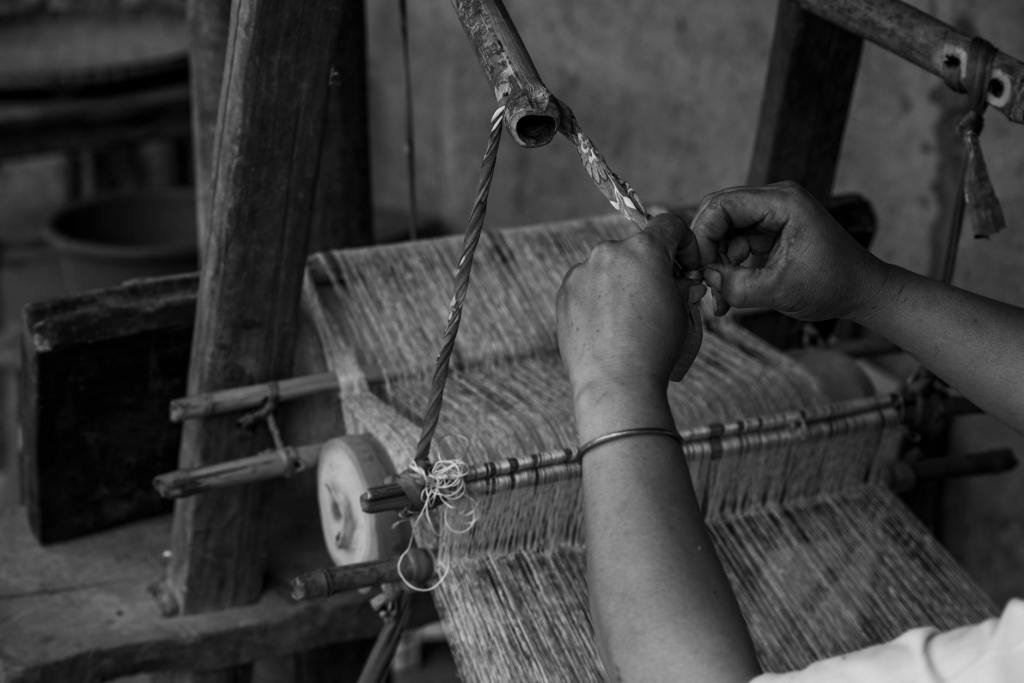
“You shall speak to all the skillful, whom I have filled with a spirit of skill, that they make Aaron’s garments to consecrate him for my priesthood.” (Exodus 28:3, ESV)
“All the women whose hearts stirred them to use their skill spun the goats’ hair.” (Exodus 35:26, ESV)
“As for these four youths, God gave them learning and skill in all literature and wisdom, and Daniel had understanding in all visions and dreams.” (Daniel 1:17, ESV)
As aforementioned, 10,000 hours of practice seems to make perfect. Well not perfect, because nothing is perfect on this earth (yet). But perhaps the level of expertise when things start to really flow…
It’s interesting that 10,000 hours is about 5 years if you consider working at something for 40 hours a week (our standard work week in the United States).
40 hours per week x 52 weeks per year = 2,080 hours per year
10,000 hours / 2,080 hours per year = 4.80 years
When you account for vacation, holidays, and just a good old fashioned rounding error, this number becomes very close to 5 years. Biblically speaking, this is also when a tree starts to produce mature fruit that can be eaten.
“When you come into the land and plant any kind of tree for food, then you shall regard its fruit as forbidden. Three years it shall be forbidden to you; it must not be eaten. And in the fourth year all its fruit shall be holy, an offering of praise to the LORD. But in the fifth year you may eat of its fruit, to increase its yield for you: I am the LORD your God.” (Leviticus 19:23-25, ESV)
Likewise, there are many other concepts of maturity that we have for the 4 and 5 year rule. College degrees and even Medical degrees last 4 years (5 for some). High school lasts four years. A child starts school around 4 or 5 years old. And certainly there are many others which come to mind surrounding this principle.
Last example, the Levitical priests were in training 5 years before they become priests according to Scholars.
So perhaps we can glean an even deeper message from this concept and the surrounding scripture of holy and mature fruit. Maybe in the fourth year, we really start to see our practice made perfect. Maybe we even start to enjoy some of the fruits of our labor. If this is true, we ought to really dedicate a significant amount of time and energy – say 3 years – before we give up on or abandon something that seems difficult and unenjoyable.
If we have really gone through steps A and B, and all the due diligence that each of these steps entail, then we ought to persist with the practice of our passion until it becomes a sticky passionfruit in the fourth year of maturity.
We will learn more about Persistence in Part 2 of this writing, but it is important to see how the principles which have become seemingly cliché in our culture, may perhaps stem from something biblical.
If everything were enjoyable immediately, and if everything were easy immediately, where would we find the rewards of hard work. We already see the dangers of immediacy in our ping, ding, chirping world of electronics. Thus, we should seek to protect the sacred, and one of these principles is the rewards we gain from our labor.
Another cliché is that growth only comes through discomfort or pain. Think about building muscle. We only truly grow when we are outside of our comfort zone. Just remember also who is the giver of this growth and these rewards.
“So neither he who plants nor he who waters is anything, but only God who gives the growth. He who plants and he who waters are one, and each will receive his wages according to his labor. For we are God’s fellow workers. You are God’s field, God’s building.” (1 Corinthians 3:7-9, ESV)
“And is there any man who has planted a vineyard and has not enjoyed its fruit? Let him go back to his house, lest he die in the battle and another man enjoy its fruit.” (Deuteronomy 20:6, ESV)
“Behold, what I have seen to be good and fitting is to eat and drink and find enjoyment in all the toil with which one toils under the sun the few days of his life that God has given him, for this is his lot. Everyone also to whom God has given wealth and possessions and power to enjoy them, and to accept his lot and rejoice in his toil—this is the gift of God.” (Ecclesiastes 5:18-19, ESV)
Takeaways to make a way…
-You probably already know or have an idea of your passion and calling in your heart, but now you need to employ methods to search it out and test it
-Not all callings or passion are from God and sometimes we pay the “stupid tax” for disobedience or not listening
-It takes effort to seek out and curate our passion, in fact many years of effort to really refine, define, and align
Further Study with your Buddy…
Go back and read (or re-read) “Going Against the Algorithm,” which helps us test and understand what is reality versus virtual reality
Sometimes “distractions” actually come from God and may point us toward our callings, read more in “Divine Distractions”
Questions for Reflection…
How can you talk (or listen) more to God and spend time with Him to soak up His wisdom, knowledge and understanding?
What questions do you have for God about your passion or calling?
What does your ideal life in service to God look like?
What are your goals, dreams and aspirations? Have you done the Warren Buffet method yet?
What will you take as a next step to define, refine or align your Passion or Calling?
 godlyyy
2 thoughts on “Purpose & Perseverance Part 1: Finding your Calling, Purpose or Gift”